Buy conversa.eu ?
We are moving the project
conversa.eu .
Are you interested in purchasing the domain
conversa.eu ?
domain@kv-gmbh.de · 0541-91531010
Buy conversa.eu ?
How can social communication and interaction be described?
Social communication and interaction can be described as the exchange of information, ideas, and emotions between individuals through verbal and non-verbal means. It involves the use of language, gestures, facial expressions, and body language to convey messages and establish connections with others. Social communication and interaction play a crucial role in building relationships, fostering understanding, and creating a sense of belonging within a community. It is a dynamic process that involves active listening, empathy, and the ability to adapt to different social contexts and cultural norms. **
What is the difference between social communication and social interaction?
Social communication refers to the exchange of information through verbal and nonverbal means, such as speaking, gestures, and facial expressions, to convey thoughts, feelings, and ideas. On the other hand, social interaction involves the broader concept of engaging with others in a social setting, including activities such as playing, sharing, and collaborating. While social communication focuses on the exchange of messages, social interaction encompasses the overall dynamic of how individuals engage with one another in social contexts. **


Similar search terms for Anarchia-Valdisole
Top-Angebote
Products related to Anarchia-Valdisole:
-
'Simposio' ValdisoleThe ‘Simposio’ from the small artisan winery Valdisole is characterized as a red wine with a light and smooth taste, not at all demanding. What contributes to the carefree nature of this wine is the carbonic maceration process used in winemaking, following the tradition of the reds from Beaujolais. In fact, Valdisole's production is guided by the adoption of ancient and modern practices used in various wine regions around the world, such as the oxidative style of Jura wines or, indeed, the carbonic maceration of Gamay from Beaujolais. One essential foundation unites the wines produced by the estate: the fact that only and exclusively grapes are used as ingredients, thus rejecting the use of additives and enological aids. The Valdisole ‘Simposio’ is made with only red grapes grown without the use of pesticides, herbicides, and other synthetic chemical substances, exclusively employing copper and mined sulfur in defense against pests. The harvest is done entirely by hand and the bunches are then vinified in stainless steel tanks.of stainless steel through spontaneous alcoholic fermentation with carbonic maceration. Throughout the entire production process, both filtration and clarification operations as well as the use of additives and enological aids are excluded, except for minimal doses of sulfites, added at bottling if necessary. The ‘Simposio’ from the artisanal reality of Piemonte, Valdisole, has a bright ruby red color. On the nose, pleasant aromas of strawberry, raspberry, lavender, hay, and dried oregano are perceived, with hints of pink pepper providing a background. The tasting is dry and of good complexity, fresh and crisp, with a non-intrusive tannin that contributes to the ease of drinking.19,00 £*Shipping: 48,00 £Secure redirect to the provider
-
'Pnoi' Valdisolerosé through soft pressing and short skin maceration directly in the press. The alcoholic fermentation is entrusted solely to indigenous yeasts and takes place between chestnut barrels and Clayver ceramic barrels, with the final bottling carried out without prior stabilization, clarification, and filtration. The rosé wine ‘Pnoi’ from Valdisole has a delicate powder pink color. The aromatic bouquet releases intriguing scents of red orange, passion fruit, cherry, raspberry, and pear, surrounded by seductive floral and spicy nuances. Fresh taste development, characterized by delicate but persistent tannins, as well as a pleasant softness given by the slight residual sugar, with a finish that recalls faint oxidative memories.rosé through soft pressing and short skin maceration directly in the press. The alcoholic fermentation is entrusted solely to indigenous yeasts and takes place between chestnut barrels and Clayver ceramic barrels, with the final bottling carried out without prior stabilization, clarification, and filtration. The rosé wine ‘Pnoi’ from Valdisole has a delicate powder pink color. The aromatic bouquet releases intriguing scents of red orange, passion fruit, cherry, raspberry, and pear, surrounded by seductive floral and spicy nuances. Fresh taste development, characterized by delicate but persistent tannins, as well as a pleasant softness given by the slight residual sugar, with a finish that recalls faint oxidative memories.29,00 £*Shipping: 48,00 £Secure redirect to the provider
-
'Amos' ValdisoleThe Piedmontese winery Valdisole introduces the red wine ‘Amos’, a label characterized by irresistible aromas of red fruits and spices. Located in Corneliano d’Alba, in the Roero production area, the artisanal reality of Valdisole is run with genuineness by Giuseppe Amato and Kyriaki Kalimeri, a couple who passionately cultivates traditional varieties of Lower Piedmont, including the indispensable Nebbiolo, an emblematic grape of Roero. The name ‘Amos’ comes from ancient Greek and means “sand”, referring to the characteristic texture of the soils that distinguish the vineyards from which the grapes destined for this bottle come, a matrix that contributes to the finesse and elegance of the wine. The red ‘Amos’ Valdisole originates from a single black grape variety cultivated without the use of pesticides, herbicides, and other synthetic chemical substances. The grapes come from the youngest vineyard of the estate, planted about 20 years ago on calcareous soils rich in sand, characterized by an average sun exposure.In the winery, the hand-harvested clusters undergo the operation of destemming and crushing, followed by the spontaneous alcoholic fermentation of the must in stainless steel tanks associated with about 20 days of contact between the must and the pomace. The wine is finally bottled without undergoing any clarification or filtration and with the only addition of a small quantity of sulfur dioxide. Valdisole ‘Amos’ has a bright ruby red color. The aromas range from notes of red fruits such as cherry and wild strawberry to floral hints of rose petals, all enriched by spicy suggestions of black pepper. The taste development is fresh, direct, and elegant, with a meaty tannic structure that does not preclude the overall great drinkability.29,00 £*Shipping: 48,00 £Secure redirect to the provider


-
What is the difference between marketing communication and dialogue marketing?
Marketing communication is a one-way communication process where a company sends out messages to its target audience through various channels such as advertising, public relations, and sales promotions. It is focused on creating brand awareness and promoting products or services. On the other hand, dialogue marketing is a two-way communication process that focuses on building relationships with customers through personalized and interactive communication. It involves engaging in conversations with customers, gathering feedback, and providing personalized offers and information based on customer preferences. Dialogue marketing aims to create a more personalized and engaging experience for customers, leading to stronger relationships and increased customer loyalty. **
-
What is the difference between interaction and communication in social work?
Interaction in social work refers to the exchange of information, ideas, and emotions between the social worker and the client. It involves non-verbal cues, body language, and other forms of expression. Communication, on the other hand, is a broader concept that encompasses interaction but also includes the process of sharing and understanding information, thoughts, and feelings through verbal and non-verbal means. While interaction is a part of communication, communication involves a more intentional and purposeful exchange of information and understanding between the social worker and the client. **
-
What is the difference between a dialogue and a conversation?
A dialogue is a formal exchange of ideas or opinions between two or more people, often with a specific purpose or goal in mind. It is structured and can involve a scripted or planned exchange. On the other hand, a conversation is a more informal and spontaneous exchange of thoughts, ideas, and feelings between individuals. It is often open-ended and can cover a wide range of topics without a specific agenda. While both involve communication between people, the key difference lies in the formality and structure of the exchange. **
-
What is the difference between a conversation and communication?
A conversation is a two-way exchange of ideas, thoughts, and information between two or more people, typically in a verbal form. Communication, on the other hand, is a broader term that encompasses various methods of conveying information, such as verbal, non-verbal, written, or visual. While a conversation is a specific type of communication that involves a back-and-forth dialogue, communication can also occur through gestures, body language, written messages, or visual cues. **

Do you like to look into your conversation partner's eyes during interaction?
As an AI, I don't have the ability to physically look into someone's eyes. However, maintaining eye contact during a conversation is often seen as a sign of active listening and engagement. It can help to convey interest and understanding, and can also help to build rapport and trust with the person you are speaking with. However, it's important to be mindful of cultural differences and individual preferences when it comes to eye contact, as some people may feel uncomfortable with prolonged eye contact. **
What are some conversation topics that are covered in a communication course?
In a communication course, students may cover a wide range of conversation topics such as nonverbal communication, active listening, conflict resolution, public speaking, intercultural communication, and effective communication in professional settings. These topics are designed to help students develop their communication skills and understand the various elements that contribute to successful communication in personal, academic, and professional contexts. Additionally, students may also learn about communication theories, communication styles, and how to adapt their communication strategies to different audiences and situations. **
Top-Angebote
Products related to Anarchia-Valdisole:
-
'Anarchia' ValdisoleThe orange wine ‘Anarchia’ from the Piedmontese reality of Valdisole is configured as a soft and enveloping interpretation of the type, the result of a peculiar winemaking technique. This bottle was born in 2016, in the second year of experimentation for the winery, free from schemes and constraints, the daughter of a truly “anarchic” oenological vision. In fact, this macerated white wine is produced through a winemaking practice comparable to the Ripasso technique used in Valpolicella, where the wine undergoes a second maceration with pomace from dried grapes. Valdisole ‘Anarchia’ is made from a single white grape variety grown on clay soils according to eco-sustainable practices, excluding the use of synthetic chemical substances. The harvest is carried out late with a percentage of dried grapes on the vine and is followed by the crushing and destemming of the bunches. At this point, spontaneous alcoholic fermentation takes place in large oak barrels, accompanied by about 15 days of maceration on the skins. This is followed by a second long maceration of 5-8 months on the pomace of other dried grapes, according to a technique similar to that used in Valpolicella for Ripasso, capable of giving pronounced softness to the finished wine. The final bottling takes place without prior filtration or clarification. The color of the macerated white wine ‘Anarchia’ from the Valdisole winery is a characteristic garnet yellow with orange reflections. On the nose, vivid and original aromas of apricot, canned peach, citrus peel such as lemon and orange, fig, and raisin emerge. The sip is soft and balanced, with elegant roundness and a delicate tannic sensation that contribute to the great impact of the tasting finish.31,00 £*Shipping: 48,00 £Secure redirect to the provider
-
'Pandora' ValdisoleWith its suave and exotic style, the macerated white wine 'Pandora' from the Piedmont-based Valdisole is an excellent accompaniment to oriental cuisine, particularly Thai cuisine. As with other Valdisole labels, the name 'Pandora' recalls ancient Greece, specifically the eponymous character from Greek mythology. The decision to dedicate the labels to these ancient myths is due to the link between the Valdisole winery and Greece. In fact, the architects of the project are Giuseppe Amato and Kyriaki Kalimeri, he from southern Italy and she from the Greek peninsula, both sommeliers who have made their passion for the world of wine their life's work.Valdisole 'Pandora' is produced from a blend of white grapes grown in accordance with the principles of organic farming, excluding the use of fertilisers, insecticides, herbicides and other synthetic chemicals. Harvesting is carried out by hand in boxes in September and is followed by the destemming of the bunches. The grapes are then placed in stainless steel tanks, containers in which spontaneous alcoholic fermentation takes place, accompanied by two months of maceration on the skins. Throughout the production process, the mass does not undergo any invasive clarification or filtration, with a minimal amount of sulphur dioxide added only at bottling.Valdisole's 'Pandora' orange wine has an intense golden yellow colour with orange hues. The bouquet is very broad and fragrant, described by sweet scents of peach, white flowers, tropical fruit, resin and beeswax. The progression on the palate is rich and textural, with good intensity and surprising dynamism thanks to the fresh, savoury verve that anticipates the aromatic closure.19,00 £*Shipping: 48,00 £Secure redirect to the provider
-
'Simposio' ValdisoleThe ‘Simposio’ from the small artisan winery Valdisole is characterized as a red wine with a light and smooth taste, not at all demanding. What contributes to the carefree nature of this wine is the carbonic maceration process used in winemaking, following the tradition of the reds from Beaujolais. In fact, Valdisole's production is guided by the adoption of ancient and modern practices used in various wine regions around the world, such as the oxidative style of Jura wines or, indeed, the carbonic maceration of Gamay from Beaujolais. One essential foundation unites the wines produced by the estate: the fact that only and exclusively grapes are used as ingredients, thus rejecting the use of additives and enological aids. The Valdisole ‘Simposio’ is made with only red grapes grown without the use of pesticides, herbicides, and other synthetic chemical substances, exclusively employing copper and mined sulfur in defense against pests. The harvest is done entirely by hand and the bunches are then vinified in stainless steel tanks.of stainless steel through spontaneous alcoholic fermentation with carbonic maceration. Throughout the entire production process, both filtration and clarification operations as well as the use of additives and enological aids are excluded, except for minimal doses of sulfites, added at bottling if necessary. The ‘Simposio’ from the artisanal reality of Piemonte, Valdisole, has a bright ruby red color. On the nose, pleasant aromas of strawberry, raspberry, lavender, hay, and dried oregano are perceived, with hints of pink pepper providing a background. The tasting is dry and of good complexity, fresh and crisp, with a non-intrusive tannin that contributes to the ease of drinking.19,00 £*Shipping: 48,00 £Secure redirect to the provider
-
'Pnoi' Valdisolerosé through soft pressing and short skin maceration directly in the press. The alcoholic fermentation is entrusted solely to indigenous yeasts and takes place between chestnut barrels and Clayver ceramic barrels, with the final bottling carried out without prior stabilization, clarification, and filtration. The rosé wine ‘Pnoi’ from Valdisole has a delicate powder pink color. The aromatic bouquet releases intriguing scents of red orange, passion fruit, cherry, raspberry, and pear, surrounded by seductive floral and spicy nuances. Fresh taste development, characterized by delicate but persistent tannins, as well as a pleasant softness given by the slight residual sugar, with a finish that recalls faint oxidative memories.rosé through soft pressing and short skin maceration directly in the press. The alcoholic fermentation is entrusted solely to indigenous yeasts and takes place between chestnut barrels and Clayver ceramic barrels, with the final bottling carried out without prior stabilization, clarification, and filtration. The rosé wine ‘Pnoi’ from Valdisole has a delicate powder pink color. The aromatic bouquet releases intriguing scents of red orange, passion fruit, cherry, raspberry, and pear, surrounded by seductive floral and spicy nuances. Fresh taste development, characterized by delicate but persistent tannins, as well as a pleasant softness given by the slight residual sugar, with a finish that recalls faint oxidative memories.29,00 £*Shipping: 48,00 £Secure redirect to the provider
-
How can social communication and interaction be described?
Social communication and interaction can be described as the exchange of information, ideas, and emotions between individuals through verbal and non-verbal means. It involves the use of language, gestures, facial expressions, and body language to convey messages and establish connections with others. Social communication and interaction play a crucial role in building relationships, fostering understanding, and creating a sense of belonging within a community. It is a dynamic process that involves active listening, empathy, and the ability to adapt to different social contexts and cultural norms. **
-
What is the difference between social communication and social interaction?
Social communication refers to the exchange of information through verbal and nonverbal means, such as speaking, gestures, and facial expressions, to convey thoughts, feelings, and ideas. On the other hand, social interaction involves the broader concept of engaging with others in a social setting, including activities such as playing, sharing, and collaborating. While social communication focuses on the exchange of messages, social interaction encompasses the overall dynamic of how individuals engage with one another in social contexts. **
-
What is the difference between marketing communication and dialogue marketing?
Marketing communication is a one-way communication process where a company sends out messages to its target audience through various channels such as advertising, public relations, and sales promotions. It is focused on creating brand awareness and promoting products or services. On the other hand, dialogue marketing is a two-way communication process that focuses on building relationships with customers through personalized and interactive communication. It involves engaging in conversations with customers, gathering feedback, and providing personalized offers and information based on customer preferences. Dialogue marketing aims to create a more personalized and engaging experience for customers, leading to stronger relationships and increased customer loyalty. **
-
What is the difference between interaction and communication in social work?
Interaction in social work refers to the exchange of information, ideas, and emotions between the social worker and the client. It involves non-verbal cues, body language, and other forms of expression. Communication, on the other hand, is a broader concept that encompasses interaction but also includes the process of sharing and understanding information, thoughts, and feelings through verbal and non-verbal means. While interaction is a part of communication, communication involves a more intentional and purposeful exchange of information and understanding between the social worker and the client. **
Similar search terms for Anarchia-Valdisole
-
'Amos' ValdisoleThe Piedmontese winery Valdisole introduces the red wine ‘Amos’, a label characterized by irresistible aromas of red fruits and spices. Located in Corneliano d’Alba, in the Roero production area, the artisanal reality of Valdisole is run with genuineness by Giuseppe Amato and Kyriaki Kalimeri, a couple who passionately cultivates traditional varieties of Lower Piedmont, including the indispensable Nebbiolo, an emblematic grape of Roero. The name ‘Amos’ comes from ancient Greek and means “sand”, referring to the characteristic texture of the soils that distinguish the vineyards from which the grapes destined for this bottle come, a matrix that contributes to the finesse and elegance of the wine. The red ‘Amos’ Valdisole originates from a single black grape variety cultivated without the use of pesticides, herbicides, and other synthetic chemical substances. The grapes come from the youngest vineyard of the estate, planted about 20 years ago on calcareous soils rich in sand, characterized by an average sun exposure.In the winery, the hand-harvested clusters undergo the operation of destemming and crushing, followed by the spontaneous alcoholic fermentation of the must in stainless steel tanks associated with about 20 days of contact between the must and the pomace. The wine is finally bottled without undergoing any clarification or filtration and with the only addition of a small quantity of sulfur dioxide. Valdisole ‘Amos’ has a bright ruby red color. The aromas range from notes of red fruits such as cherry and wild strawberry to floral hints of rose petals, all enriched by spicy suggestions of black pepper. The taste development is fresh, direct, and elegant, with a meaty tannic structure that does not preclude the overall great drinkability.29,00 £*Shipping: 48,00 £Secure redirect to the provider
-
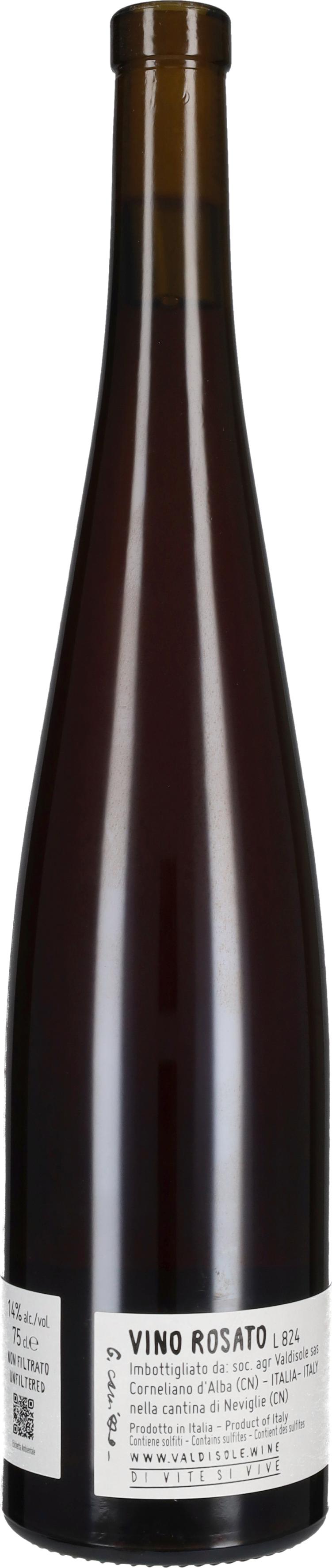
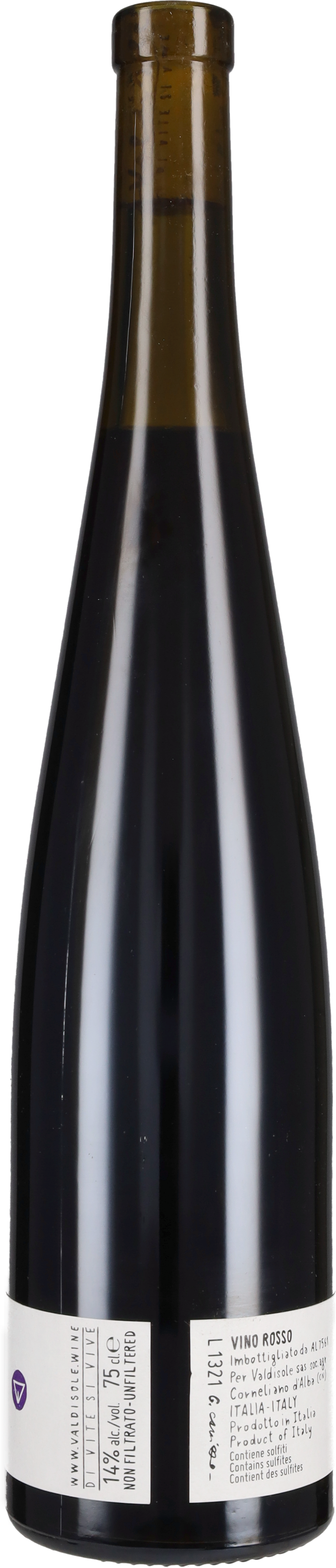
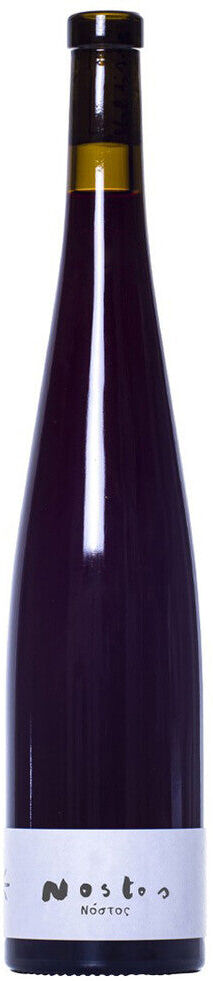
'Nostos' Valdisoleof maceration on the skins in stainless steel tanks. The final bottling is done without prior clarification or filtration and with no or minimal additions of sulfites. In the glass, Valdisole's 'Nostos' expresses a delicate purple-red hue. Pleasant aromas of rose, geranium flower, strawberry jam, and red and black raspberries outline the olfactory spectrum. The progression on the palate is fresh and elegant, with a beautiful aromatic intensity, with well-integrated tannins accompanying the vivid and juicy sensations of berries and flowers in the finish. This is a perfect red wine to pair with platters of medium-aged cheeses and cured meats, or with first and second courses of not overly flavorful meats, such as veal or pork.of maceration on the skins in stainless steel tanks. The final bottling is done without prior clarification or filtration and with no or minimal additions of sulfites. In the glass, Valdisole's 'Nostos' expresses a delicate purple-red hue. Pleasant aromas of rose, geranium flower, strawberry jam, and red and black raspberries outline the olfactory spectrum. The progression on the palate is fresh and elegant, with a beautiful aromatic intensity, with well-integrated tannins accompanying the vivid and juicy sensations of berries and flowers in the finish. This is a perfect red wine to pair with platters of medium-aged cheeses and cured meats, or with first and second courses of not overly flavorful meats, such as veal or pork.23,00 £*Shipping: 48,00 £Secure redirect to the provider
-
'Utopia' ValdisoleThe artisanal Piedmontese wine cellar Valdisole presents the red wine 'Utopia', a bottle of formidable smoothness of flavour endowed with a pleasantly rustic character. This label is part of the varied range of proposals from Valdisole, creator of authentic and original wines, the result of a production vision centred on respect for the environment, the authenticity of the wines and the expression of the territory. With this in mind, the use of synthetic chemical products such as herbicides and pesticides in the vineyard is absolutely banned, while in the cellar fermentation is entrusted solely to indigenous yeasts and any external input is excluded. This gives rise to wines like 'Utopia', raw and sincere expressions of the territory.Valdisole 'Utopia' is derived from a single black grape vine cultivated in a sustainable manner following the dictates of organic farming and thus completely excluding synthetic chemicals. The vines stand on soils consisting of limestone and sandstone, and the grapes are harvested by hand in boxes in September. Once in the cellar, the grapes are mellowed in 300-litre terracotta amphorae, containers in which spontaneous alcoholic fermentation takes place with a very prolonged 8-month maceration on the skins, during which any aggressive extraction technique is avoided, including fulling and pumping over, with the skins remaining in a sort of delicate infusion. Invasive clarification and filtration processes are then excluded throughout the entire process.On visual examination, the red wine 'Utopia' from the artisanal wine producer Valdisole shows an intense, veiled ruby red colour. The aromatic range opens on notes of small red fruits and flowers, enriched by evocative sensations of undergrowth and earth. The taste is rich but at the same time drinkable, characterised by pleasant tannin and intense freshness. The exceptionally smooth finish then reveals a certain, pleasant rusticity.27,00 £*Shipping: 48,00 £Secure redirect to the provider
-
What is the difference between a dialogue and a conversation?
A dialogue is a formal exchange of ideas or opinions between two or more people, often with a specific purpose or goal in mind. It is structured and can involve a scripted or planned exchange. On the other hand, a conversation is a more informal and spontaneous exchange of thoughts, ideas, and feelings between individuals. It is often open-ended and can cover a wide range of topics without a specific agenda. While both involve communication between people, the key difference lies in the formality and structure of the exchange. **
-
What is the difference between a conversation and communication?
A conversation is a two-way exchange of ideas, thoughts, and information between two or more people, typically in a verbal form. Communication, on the other hand, is a broader term that encompasses various methods of conveying information, such as verbal, non-verbal, written, or visual. While a conversation is a specific type of communication that involves a back-and-forth dialogue, communication can also occur through gestures, body language, written messages, or visual cues. **
-
Do you like to look into your conversation partner's eyes during interaction?
As an AI, I don't have the ability to physically look into someone's eyes. However, maintaining eye contact during a conversation is often seen as a sign of active listening and engagement. It can help to convey interest and understanding, and can also help to build rapport and trust with the person you are speaking with. However, it's important to be mindful of cultural differences and individual preferences when it comes to eye contact, as some people may feel uncomfortable with prolonged eye contact. **
-
What are some conversation topics that are covered in a communication course?
In a communication course, students may cover a wide range of conversation topics such as nonverbal communication, active listening, conflict resolution, public speaking, intercultural communication, and effective communication in professional settings. These topics are designed to help students develop their communication skills and understand the various elements that contribute to successful communication in personal, academic, and professional contexts. Additionally, students may also learn about communication theories, communication styles, and how to adapt their communication strategies to different audiences and situations. **
* All prices are inclusive of VAT and, if applicable, plus shipping costs. The offer information is based on the details provided by the respective shop and is updated through automated processes. Real-time updates do not occur, so deviations can occur in individual cases. ** Note: Parts of this content were created by AI.