Buy conversa.eu ?
We are moving the project
conversa.eu .
Are you interested in purchasing the domain
conversa.eu ?
domain@kv-gmbh.de · 0541-91531010
Buy conversa.eu ?
How can enantiomers be recognized?
Enantiomers can be recognized by their ability to rotate plane-polarized light in opposite directions. This property is known as optical activity, and enantiomers are referred to as being either dextrorotatory (rotating light to the right) or levorotatory (rotating light to the left). Another method for recognizing enantiomers is through their interactions with other chiral molecules, such as in chiral chromatography or chiral shift reagents in NMR spectroscopy. Additionally, enantiomers may exhibit different physical properties, such as melting points or boiling points, which can be used to differentiate them. **
What are enantiomers and diastereomers?
Enantiomers are a type of stereoisomer that are non-superimposable mirror images of each other. This means that they have the same connectivity of atoms, but their spatial arrangement is such that they cannot be aligned with their mirror image. Diastereomers, on the other hand, are stereoisomers that are not mirror images of each other. This means that they have different connectivity of atoms and different spatial arrangements, resulting in different physical and chemical properties. Both enantiomers and diastereomers are important in the field of organic chemistry and can have different biological activities and effects. **


Similar search terms for Enantiomers
Top-Angebote
Products related to Enantiomers:
-
"""Duckhorn The Discussion 2021 Red Wine - California""""""A complex medley of brambly red currants, black raspberry, fig compote & rose petals grace the nose. The palate is supple and velvety with powdery tannins bolstering age-ability. Extended barrel aging yields wonderful complexity with hints of..."191,99 $*Shipping: 0,00 $Secure redirect to the provider
-
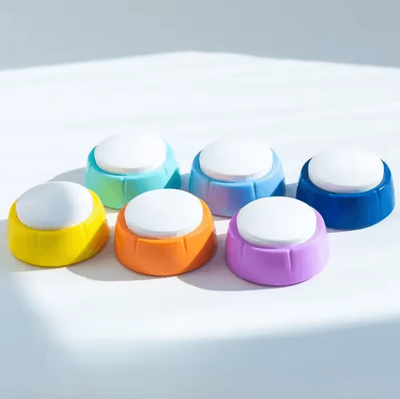
Inspire Curations TalkPaws Dog Communication Buttons For Pet Training & Interaction only Buttons 5 PiecesStrengthen the bond with your pet through a fun and engaging way to communicate. These recordable dog communication buttons allow dogs and cats to associate words, actions, and needs with simple button presses, helping create interactive training...130,00 $*Shipping: 0,00 $Secure redirect to the provider
-
Inspire Curations TalkPaws Dog Communication Buttons For Pet Training & Interaction only Buttons 8 PiecesStrengthen the bond with your pet through a fun and engaging way to communicate. These recordable dog communication buttons allow dogs and cats to associate words, actions, and needs with simple button presses, helping create interactive training...140,50 $*Shipping: 0,00 $Secure redirect to the provider
-
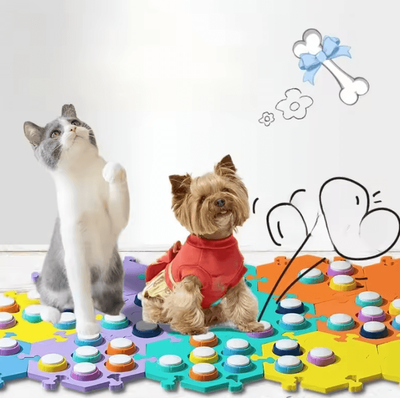
Inspire Curations TalkPaws Dog Communication Buttons For Pet Training & Interaction with Mats 6 PiecesStrengthen the bond with your pet through a fun and engaging way to communicate. These recordable dog communication buttons allow dogs and cats to associate words, actions, and needs with simple button presses, helping create interactive training...145,50 $*Shipping: 0,00 $Secure redirect to the provider


-
How do you distinguish enantiomers?
Enantiomers are molecules that are mirror images of each other but cannot be superimposed on each other. They have the same physical and chemical properties, except for their interaction with plane-polarized light. Enantiomers rotate plane-polarized light in opposite directions, either clockwise (dextrorotatory) or counterclockwise (levorotatory). This property is known as optical activity and is used to distinguish enantiomers in a laboratory setting. **
-
What are the differences between enantiomers?
Enantiomers are molecules that are mirror images of each other but cannot be superimposed onto each other. They have the same physical and chemical properties, such as melting point and boiling point, but they interact differently with polarized light and other chiral molecules. Enantiomers also have different biological activities, as they can interact differently with enzymes and receptors in the body. These differences in biological activity can have important implications in pharmaceuticals and drug development. **
-
What are enantiomers, diastereomers, or something else?
Enantiomers are a type of stereoisomer that are non-superimposable mirror images of each other. They have the same connectivity of atoms but differ in their spatial arrangement. Diastereomers, on the other hand, are stereoisomers that are not mirror images of each other and have different physical and chemical properties. They arise when molecules have multiple chiral centers and differ in their configuration at some, but not all, of these centers. These terms are used to describe different types of stereoisomers based on their relationship in three-dimensional space. **
-
How do enantiomers behave in polarimetric investigations?
Enantiomers behave differently in polarimetric investigations because they rotate plane-polarized light in opposite directions. This property is known as optical activity, and it is a result of the different spatial arrangement of atoms in the molecules. When enantiomers are placed in a polarimeter, they will cause the plane of polarized light to rotate either to the left (levorotatory) or to the right (dextrorotatory) by the same amount but in opposite directions. This property allows scientists to distinguish between enantiomers and determine their purity in a sample. **

What is the difference between enantiomers and chirality?
Enantiomers are a type of stereoisomer, meaning they have the same molecular formula and connectivity, but differ in the spatial arrangement of their atoms. Enantiomers are non-superimposable mirror images of each other, meaning they are identical in every way except for their orientation in 3D space. Chirality, on the other hand, refers to the property of a molecule that makes it non-superimposable on its mirror image. In other words, a molecule is chiral if it cannot be rotated or flipped to match its mirror image. Enantiomers are a specific example of chirality, where two molecules are chiral and non-superimposable mirror images of each other. **
How can social communication and interaction be described?
Social communication and interaction can be described as the exchange of information, ideas, and emotions between individuals through verbal and non-verbal means. It involves the use of language, gestures, facial expressions, and body language to convey messages and establish connections with others. Social communication and interaction play a crucial role in building relationships, fostering understanding, and creating a sense of belonging within a community. It is a dynamic process that involves active listening, empathy, and the ability to adapt to different social contexts and cultural norms. **
Top-Angebote
Products related to Enantiomers:
-
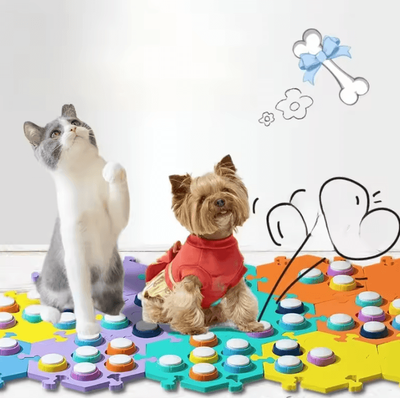
Inspire Curations TalkPaws Dog Communication Buttons For Pet Training & Interaction with Mats 9 PiecesStrengthen the bond with your pet through a fun and engaging way to communicate. These recordable dog communication buttons allow dogs and cats to associate words, actions, and needs with simple button presses, helping create interactive training...155,50 $*Shipping: 0,00 $Secure redirect to the provider
-
Hodder & Stoughton Conversations with God: An Uncommon Dialogue Book 2 by Neale Donald Walsch - Paperback - Spiritual Dialogue Non FictionConversations with God: An Uncommon Dialogue Book 2 is the second volume in Neale Donald Walsch's internationally bestselling spiritual series. Written as a direct dialogue with the divine, this book broadens the scope of Book One to tackle global questions - politics, education, sexuality, and the metaphysical forces shaping humanity's future. Thoughtful and provocative, it remains one of the most widely read works of contemporary spirituality. When Neale Donald Walsch found himself at a personal and spiritual low point, he sat down and wrote an angry letter addressed to God - and, unexpectedly, found answers flowing back through his pen. That encounter became Conversations with God: Book 1, a worldwide phenomenon that sparked a thirty-four-language, multi-million-copy series. Book 2 continues the dialogue, but widens its lens dramatically, exploring topics that have a significant impact on our lives and the world we live in. Published by Hodder & Stoughton, this book is a thought-provoking read for anyone interested in spirituality and personal growth.4,99 £*Shipping: 2,99 £Secure redirect to the provider
-
"""Duckhorn The Discussion 2021 Red Wine - California""""""A complex medley of brambly red currants, black raspberry, fig compote & rose petals grace the nose. The palate is supple and velvety with powdery tannins bolstering age-ability. Extended barrel aging yields wonderful complexity with hints of..."191,99 $*Shipping: 0,00 $Secure redirect to the provider
-
Inspire Curations TalkPaws Dog Communication Buttons For Pet Training & Interaction only Buttons 5 PiecesStrengthen the bond with your pet through a fun and engaging way to communicate. These recordable dog communication buttons allow dogs and cats to associate words, actions, and needs with simple button presses, helping create interactive training...130,00 $*Shipping: 0,00 $Secure redirect to the provider
-
How can enantiomers be recognized?
Enantiomers can be recognized by their ability to rotate plane-polarized light in opposite directions. This property is known as optical activity, and enantiomers are referred to as being either dextrorotatory (rotating light to the right) or levorotatory (rotating light to the left). Another method for recognizing enantiomers is through their interactions with other chiral molecules, such as in chiral chromatography or chiral shift reagents in NMR spectroscopy. Additionally, enantiomers may exhibit different physical properties, such as melting points or boiling points, which can be used to differentiate them. **
-
What are enantiomers and diastereomers?
Enantiomers are a type of stereoisomer that are non-superimposable mirror images of each other. This means that they have the same connectivity of atoms, but their spatial arrangement is such that they cannot be aligned with their mirror image. Diastereomers, on the other hand, are stereoisomers that are not mirror images of each other. This means that they have different connectivity of atoms and different spatial arrangements, resulting in different physical and chemical properties. Both enantiomers and diastereomers are important in the field of organic chemistry and can have different biological activities and effects. **
-
How do you distinguish enantiomers?
Enantiomers are molecules that are mirror images of each other but cannot be superimposed on each other. They have the same physical and chemical properties, except for their interaction with plane-polarized light. Enantiomers rotate plane-polarized light in opposite directions, either clockwise (dextrorotatory) or counterclockwise (levorotatory). This property is known as optical activity and is used to distinguish enantiomers in a laboratory setting. **
-
What are the differences between enantiomers?
Enantiomers are molecules that are mirror images of each other but cannot be superimposed onto each other. They have the same physical and chemical properties, such as melting point and boiling point, but they interact differently with polarized light and other chiral molecules. Enantiomers also have different biological activities, as they can interact differently with enzymes and receptors in the body. These differences in biological activity can have important implications in pharmaceuticals and drug development. **
Similar search terms for Enantiomers
-
Inspire Curations TalkPaws Dog Communication Buttons For Pet Training & Interaction only Buttons 8 PiecesStrengthen the bond with your pet through a fun and engaging way to communicate. These recordable dog communication buttons allow dogs and cats to associate words, actions, and needs with simple button presses, helping create interactive training...140,50 $*Shipping: 0,00 $Secure redirect to the provider
-
Inspire Curations TalkPaws Dog Communication Buttons For Pet Training & Interaction with Mats 6 PiecesStrengthen the bond with your pet through a fun and engaging way to communicate. These recordable dog communication buttons allow dogs and cats to associate words, actions, and needs with simple button presses, helping create interactive training...145,50 $*Shipping: 0,00 $Secure redirect to the provider
-
Inspire Curations TalkPaws Dog Communication Buttons For Pet Training & Interaction only Buttons 6 PiecesStrengthen the bond with your pet through a fun and engaging way to communicate. These recordable dog communication buttons allow dogs and cats to associate words, actions, and needs with simple button presses, helping create interactive training...135,00 $*Shipping: 0,00 $Secure redirect to the provider
-
Inspire Curations TalkPaws Dog Communication Buttons For Pet Training & Interaction with Mats 5 PiecesStrengthen the bond with your pet through a fun and engaging way to communicate. These recordable dog communication buttons allow dogs and cats to associate words, actions, and needs with simple button presses, helping create interactive training...140,50 $*Shipping: 0,00 $Secure redirect to the provider
-
What are enantiomers, diastereomers, or something else?
Enantiomers are a type of stereoisomer that are non-superimposable mirror images of each other. They have the same connectivity of atoms but differ in their spatial arrangement. Diastereomers, on the other hand, are stereoisomers that are not mirror images of each other and have different physical and chemical properties. They arise when molecules have multiple chiral centers and differ in their configuration at some, but not all, of these centers. These terms are used to describe different types of stereoisomers based on their relationship in three-dimensional space. **
-
How do enantiomers behave in polarimetric investigations?
Enantiomers behave differently in polarimetric investigations because they rotate plane-polarized light in opposite directions. This property is known as optical activity, and it is a result of the different spatial arrangement of atoms in the molecules. When enantiomers are placed in a polarimeter, they will cause the plane of polarized light to rotate either to the left (levorotatory) or to the right (dextrorotatory) by the same amount but in opposite directions. This property allows scientists to distinguish between enantiomers and determine their purity in a sample. **
-
What is the difference between enantiomers and chirality?
Enantiomers are a type of stereoisomer, meaning they have the same molecular formula and connectivity, but differ in the spatial arrangement of their atoms. Enantiomers are non-superimposable mirror images of each other, meaning they are identical in every way except for their orientation in 3D space. Chirality, on the other hand, refers to the property of a molecule that makes it non-superimposable on its mirror image. In other words, a molecule is chiral if it cannot be rotated or flipped to match its mirror image. Enantiomers are a specific example of chirality, where two molecules are chiral and non-superimposable mirror images of each other. **
-
How can social communication and interaction be described?
Social communication and interaction can be described as the exchange of information, ideas, and emotions between individuals through verbal and non-verbal means. It involves the use of language, gestures, facial expressions, and body language to convey messages and establish connections with others. Social communication and interaction play a crucial role in building relationships, fostering understanding, and creating a sense of belonging within a community. It is a dynamic process that involves active listening, empathy, and the ability to adapt to different social contexts and cultural norms. **
* All prices are inclusive of VAT and, if applicable, plus shipping costs. The offer information is based on the details provided by the respective shop and is updated through automated processes. Real-time updates do not occur, so deviations can occur in individual cases. ** Note: Parts of this content were created by AI.