Buy conversa.eu ?
We are moving the project
conversa.eu .
Are you interested in purchasing the domain
conversa.eu ?
domain@kv-gmbh.de · 0541-91531010
Buy conversa.eu ?
Why is there no interaction reaction after a voice message?
There is no interaction reaction after a voice message because voice messages are typically one-way communication. Unlike text messages or emails, voice messages do not require an immediate response and are often used for conveying information or emotions without expecting an immediate reply. Additionally, voice messages allow the sender to express themselves more clearly and with more emotion than text, making them more akin to leaving a voicemail than engaging in a real-time conversation. Therefore, the lack of interaction reaction is a natural part of the asynchronous nature of voice messaging. **
What is the law of interaction of action and reaction?
The law of interaction of action and reaction, also known as Newton's third law of motion, states that for every action, there is an equal and opposite reaction. This means that when one object exerts a force on another object, the second object exerts an equal force in the opposite direction. This law helps explain how forces work in pairs and how they affect the motion of objects. It is a fundamental principle in physics that governs the behavior of objects in the universe. **

Similar search terms for Reaction
Top-Angebote
Products related to Reaction:


-
What does the law of interaction action and reaction state?
The law of interaction, also known as Newton's third law of motion, states that for every action, there is an equal and opposite reaction. This means that when one object exerts a force on another object, the second object exerts an equal force in the opposite direction. This law helps to explain how objects interact with each other and how forces are balanced in nature. **
-
What does the law of interaction, action and reaction, state?
The law of interaction, also known as the third law of motion, states that for every action, there is an equal and opposite reaction. This means that when one object exerts a force on another object, the second object exerts an equal force in the opposite direction. This law helps explain how objects interact with each other and how forces are balanced in nature. **
-
'Reaction or no reaction?'
It is difficult to determine whether a reaction will occur without more specific information about the situation. In general, reactions can occur when two or more substances interact with each other to form new products. Factors such as the nature of the substances, temperature, concentration, and presence of a catalyst can all influence whether a reaction will take place. It is important to consider these factors when predicting whether a reaction will occur. **
-
What does the law of interaction state about action and reaction?
The law of interaction, also known as Newton's third law of motion, states that for every action, there is an equal and opposite reaction. This means that whenever one object exerts a force on another object, the second object exerts an equal force in the opposite direction. In simpler terms, this law explains that forces always occur in pairs - if object A pushes on object B, object B will push back on object A with the same amount of force. **


Are photo reaction and synthesis reaction the same as light reaction and dark reaction?
No, photo reaction and synthesis reaction are not the same as light reaction and dark reaction. Photo reaction and synthesis reaction are terms used in organic chemistry to describe reactions that are initiated by light, while light reaction and dark reaction are terms used in photosynthesis to describe the two stages of the process. In photosynthesis, light reaction refers to the stage where light energy is used to produce ATP and NADPH, while dark reaction refers to the stage where these energy carriers are used to fix carbon dioxide and produce glucose. **
Is the following reaction a redox reaction?
To determine if a reaction is a redox reaction, we need to check if there is a transfer of electrons between reactants. In a redox reaction, one reactant is oxidized (loses electrons) while another is reduced (gains electrons). If there is no transfer of electrons, then the reaction is not a redox reaction. **
Top-Angebote
Products related to Reaction:
-
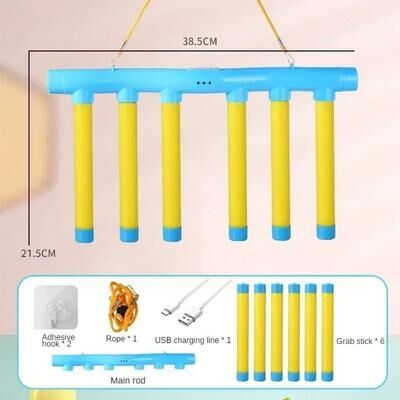
Multisell Products Hub Falling Sticks Challenge Game Fun Reaction Training Toy For Family Interaction & Parties blueLooking for a fun and engaging activity that sharpens reaction skills while encouraging family interaction The Falling Sticks Challenge Game is designed to enhance reaction time, focus, and handeye coordination, making it the perfect addition to...39,97 $*Shipping: 0,00 $Secure redirect to the provider
-
GlowBake Fun Challenge Falling Sticks Game Set Educational Toy For Reaction Ability Training, Parent Child Interaction & Party blue CrossbarEnhance Reaction Skills with the Fun Challenge Falling Sticks Game Set Introduce an engaging way to develop reaction ability and handeye coordination with our Fun Challenge Falling Sticks Game Set. Designed for both educational purposes and...49,97 $*Shipping: 0,00 $Secure redirect to the provider
-
Why is there no interaction reaction after a voice message?
There is no interaction reaction after a voice message because voice messages are typically one-way communication. Unlike text messages or emails, voice messages do not require an immediate response and are often used for conveying information or emotions without expecting an immediate reply. Additionally, voice messages allow the sender to express themselves more clearly and with more emotion than text, making them more akin to leaving a voicemail than engaging in a real-time conversation. Therefore, the lack of interaction reaction is a natural part of the asynchronous nature of voice messaging. **
-
What is the law of interaction of action and reaction?
The law of interaction of action and reaction, also known as Newton's third law of motion, states that for every action, there is an equal and opposite reaction. This means that when one object exerts a force on another object, the second object exerts an equal force in the opposite direction. This law helps explain how forces work in pairs and how they affect the motion of objects. It is a fundamental principle in physics that governs the behavior of objects in the universe. **
-
What does the law of interaction action and reaction state?
The law of interaction, also known as Newton's third law of motion, states that for every action, there is an equal and opposite reaction. This means that when one object exerts a force on another object, the second object exerts an equal force in the opposite direction. This law helps to explain how objects interact with each other and how forces are balanced in nature. **
-
What does the law of interaction, action and reaction, state?
The law of interaction, also known as the third law of motion, states that for every action, there is an equal and opposite reaction. This means that when one object exerts a force on another object, the second object exerts an equal force in the opposite direction. This law helps explain how objects interact with each other and how forces are balanced in nature. **
Similar search terms for Reaction
-
'Reaction or no reaction?'
It is difficult to determine whether a reaction will occur without more specific information about the situation. In general, reactions can occur when two or more substances interact with each other to form new products. Factors such as the nature of the substances, temperature, concentration, and presence of a catalyst can all influence whether a reaction will take place. It is important to consider these factors when predicting whether a reaction will occur. **
-
What does the law of interaction state about action and reaction?
The law of interaction, also known as Newton's third law of motion, states that for every action, there is an equal and opposite reaction. This means that whenever one object exerts a force on another object, the second object exerts an equal force in the opposite direction. In simpler terms, this law explains that forces always occur in pairs - if object A pushes on object B, object B will push back on object A with the same amount of force. **
-
Are photo reaction and synthesis reaction the same as light reaction and dark reaction?
No, photo reaction and synthesis reaction are not the same as light reaction and dark reaction. Photo reaction and synthesis reaction are terms used in organic chemistry to describe reactions that are initiated by light, while light reaction and dark reaction are terms used in photosynthesis to describe the two stages of the process. In photosynthesis, light reaction refers to the stage where light energy is used to produce ATP and NADPH, while dark reaction refers to the stage where these energy carriers are used to fix carbon dioxide and produce glucose. **
-
Is the following reaction a redox reaction?
To determine if a reaction is a redox reaction, we need to check if there is a transfer of electrons between reactants. In a redox reaction, one reactant is oxidized (loses electrons) while another is reduced (gains electrons). If there is no transfer of electrons, then the reaction is not a redox reaction. **
* All prices are inclusive of VAT and, if applicable, plus shipping costs. The offer information is based on the details provided by the respective shop and is updated through automated processes. Real-time updates do not occur, so deviations can occur in individual cases. ** Note: Parts of this content were created by AI.